Latest News

- Call Us9451524372,6387925025
- Student Login College Login
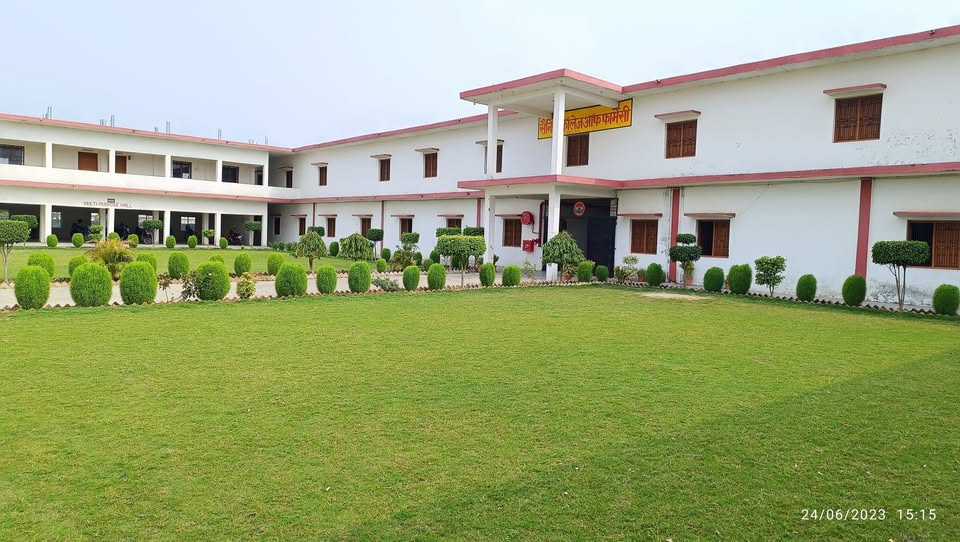
Located in one of the biggest city metropolis of State of Uttar Pradesh Mau Sainik College of Pharmacy, Mau stands as a hallmark of higher education. It is an educational community where students of various religions and cultural backgrounds study and work together in a congenial atmosphere..
The college is geared to provide maximum scholastic benefit to each individual student.Keeping pace with changing times and observing the changing composition of the students thecollege has been constantly and consistently upgrading its motives and objectives.
Read More
D.Pharm, or Diploma in Pharmacy, is a two-year undergraduate program designed to provide foundational knowledge and practical skills for a career in the pharmaceutical industry, including roles in hospitals, community pharmacies, drug manufacturing, and retail settings. Graduates are prepared for entry-level positions, can pursue higher education like B.Pharm or Pharm.D., and can even open their own pharmacy after completing a mandatory internship
| Course | Affiliation with | Duration of course | Total seats |
| D. Pharm. | BTE Lucknow | 2 Years | 60 |
| B. Pharm. | AKTU Lucknow | 4 Years | 60 |
| B. Pharm. (2nd yr. through lateral entry) | AKTU Lucknow | 3 Years | 6 |
| Course | Eligibility | Mode of admission |
| D. Pharm. | 10+2 pass with science subjects (Physics, Chemistry and Biology/Math) | Merit in the Entrance examination and counseling JEECUP |
| B. Pharm. | 10+2 pass with 45% (40% for SC/ST candidate) marks aggregate in Phy., Chem., Biology or Math | Merit in the Entrance examination and counseling CUET, UPSEE and Direct** |
| B. Pharm. (2nd yr. through lateral entry) | D. Pharm. pass with 60% marks form PCI approved college | CUET, UPSEE and Direct** |
This is the most traditional, yet still vital, role. You’ll be responsible for dispensing medications, counseling patients on their proper use and potential side effects, and ensuring medication safety.
Scope: High demand, especially in rural areas. Opportunity to build relationships with patients and contribute directly to their well-being.
Future Paths: Specialization in areas like geriatrics, oncology, or cardiology. Management roles within the pharmacy.
The pharmaceutical industry offers a plethora of opportunities for Bachelor of Pharmacy graduates.
As a Drug Inspector, your primary role is to monitor and enforce drug laws, making sure that medicines available in the market are safe, effective, and of high quality. You’ll inspect manufacturing units, pharmacies, and wholesalers to ensure they follow legal and safety standards.
A Clinical Research Associate plays a key role in overseeing clinical trials, making sure that the studies are conducted according to medical guidelines and protocols. They ensure the accuracy of data and that patient safety standards are maintained throughout the trial.
Professionals in Drug Regulatory Affairs are responsible for ensuring that pharmaceutical products meet all legal and safety requirements before they reach the market. They work closely with government agencies to manage approvals, licenses, and documentation.
In this role, you’ll be responsible for promoting and explaining pharmaceutical products to doctors, pharmacists, and other healthcare professionals. It’s about building relationships and helping healthcare providers understand how a product can benefit their patients.
This path involves teaching pharmacy students and conducting research in colleges or universities. It’s a role where you share knowledge, mentor future pharmacists, and explore new developments in the pharmaceutical field.
If you have a passion for business, you can choose to start your own pharmacy, pharmaceutical company, or healthcare consultancy. This path allows you to be your own boss and bring your ideas to life.
The pharmaceutical industry is experiencing continuous growth, driven by factors such as:
To maximize your career potential after B.Pharmacy, consider pursuing further studies, such as:
Choosing a career after B. Pharma Course offers many possibilities. Whether you prefer working in labs, marketing, or starting a business, every path has its rewards. Match your interests with market demand to find the right fit. Keep building your skills and stay open to new opportunities. Your future in pharmacy is bright—start planning today!
Affiliated to Dr A.P.J. Abdul Kalam Technical University & Board of Technical Education Lucknow Uttar Pradesh
.jpeg)
.jpeg)
.jpeg)
.jpeg)